Commercial Roof Repair
Leaks traced from the stain inside to the lap, boot, curb, or drain, then fixed with matching material. Repairs stop where wet insulation or seams failing roof-wide point to replacement instead.
Roof repair detailsOur Services
We provide commercial roofing services in Winchester and nearby towns, from leak repair on one curb to a full tear-off and new roof on a working plant.
Your First Visit
Six Services
Each of our commercial roofing services in Winchester starts with an inspection, then moves to the system the roof needs.
Leaks traced from the stain inside to the lap, boot, curb, or drain, then fixed with matching material. Repairs stop where wet insulation or seams failing roof-wide point to replacement instead.
Roof repair details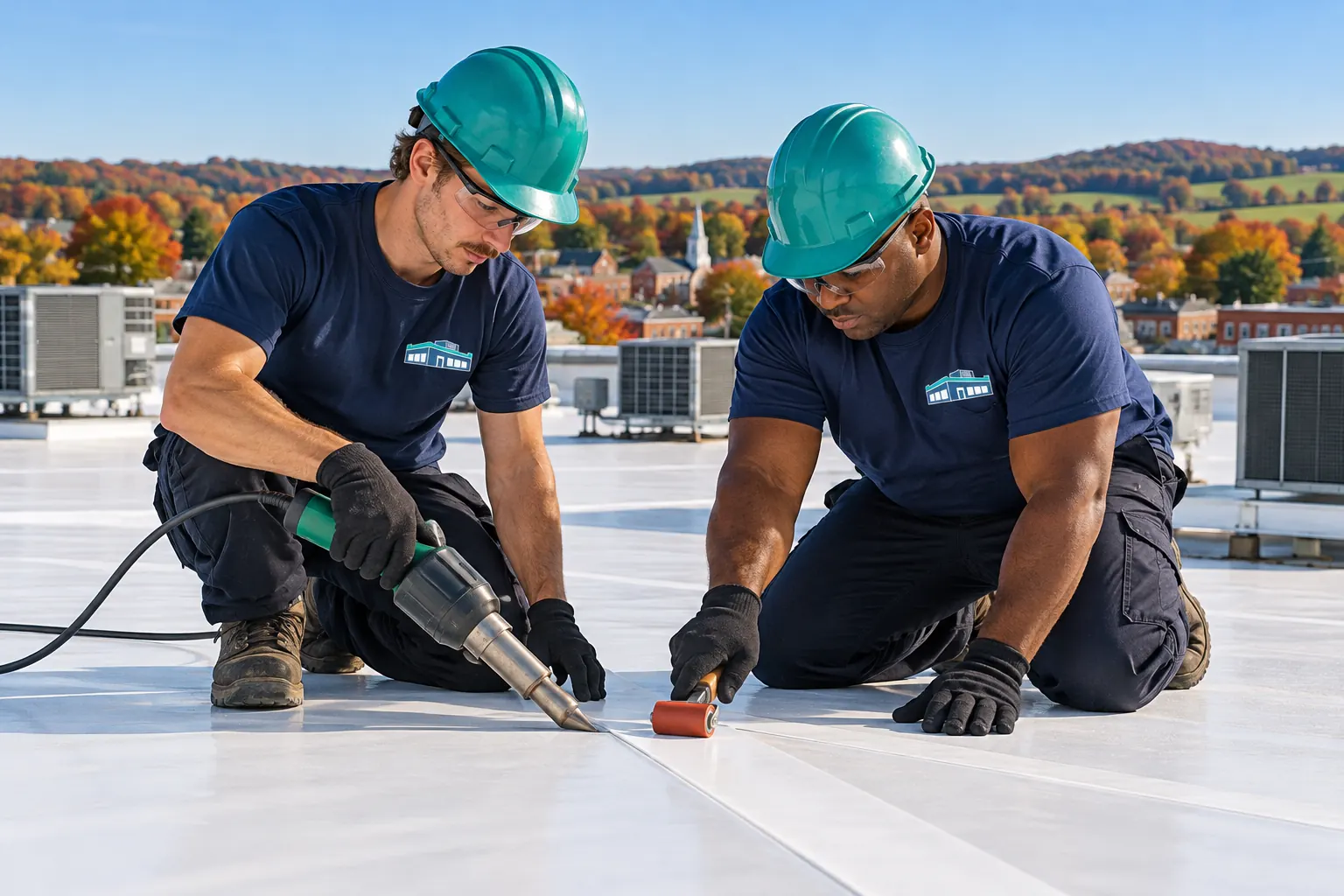
White, hot-air welded single-ply for warehouses and offices, installed as a recover or after tear-off. Mechanically attached or fully adhered, matched to the deck and the wind at the corners.
TPO roofing details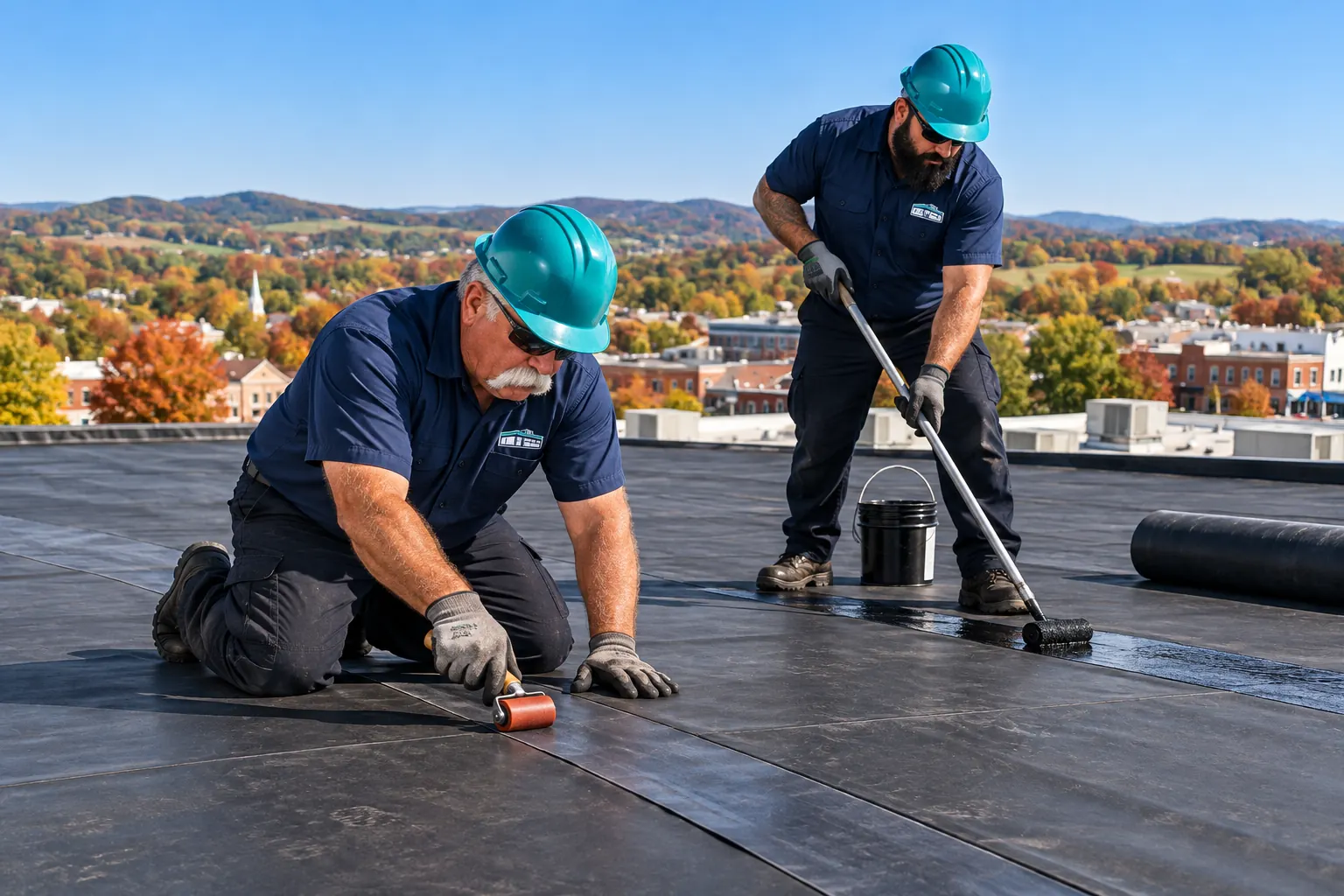
Rubber membrane with taped seams, flexible in cold weather, in black, white-on-black, or ballasted form. Drains are sumped and parapets hand-flashed, where rubber roofs leak first.
EPDM roofing details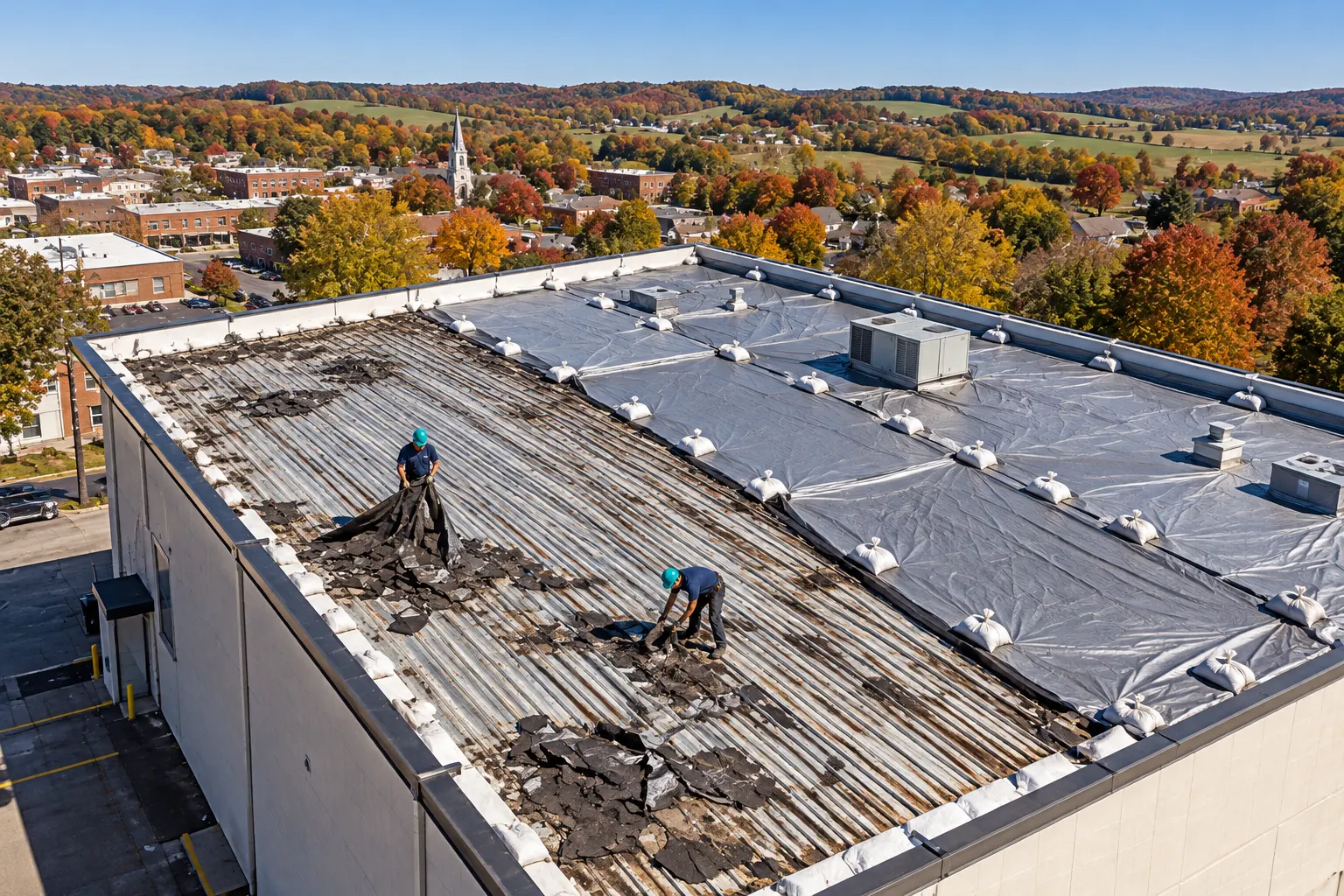
Low-slope replacements built around drainage: tapered insulation, crickets, new drains, and overflow scuppers. Insulation thickness is set with the permit office before ordering.
Flat roofing details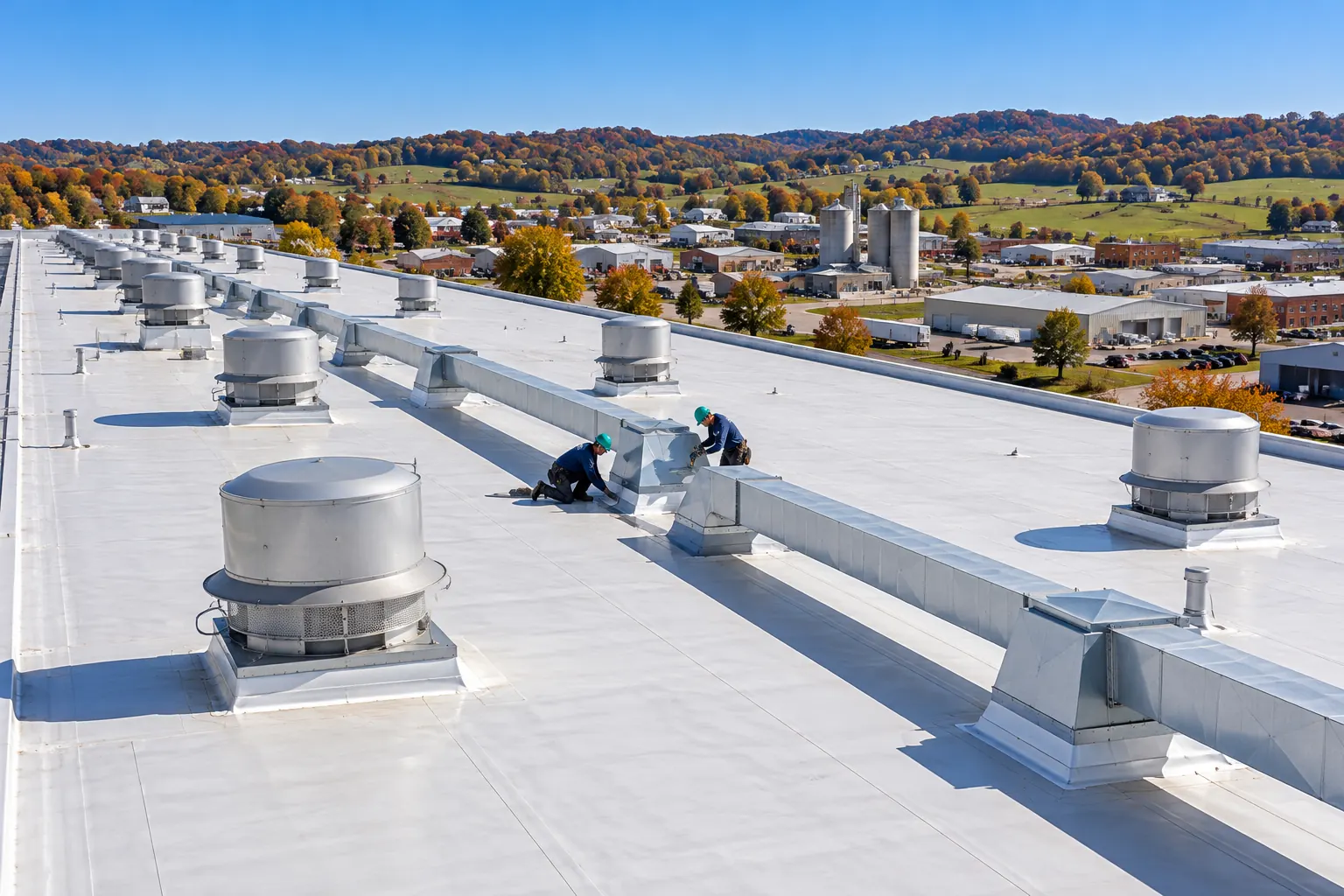
Plant roofs with exhaust fans, heavy units, and pipe racks, replaced in phases over running production. The membrane near each fan is checked against what that fan discharges.
Industrial roofing details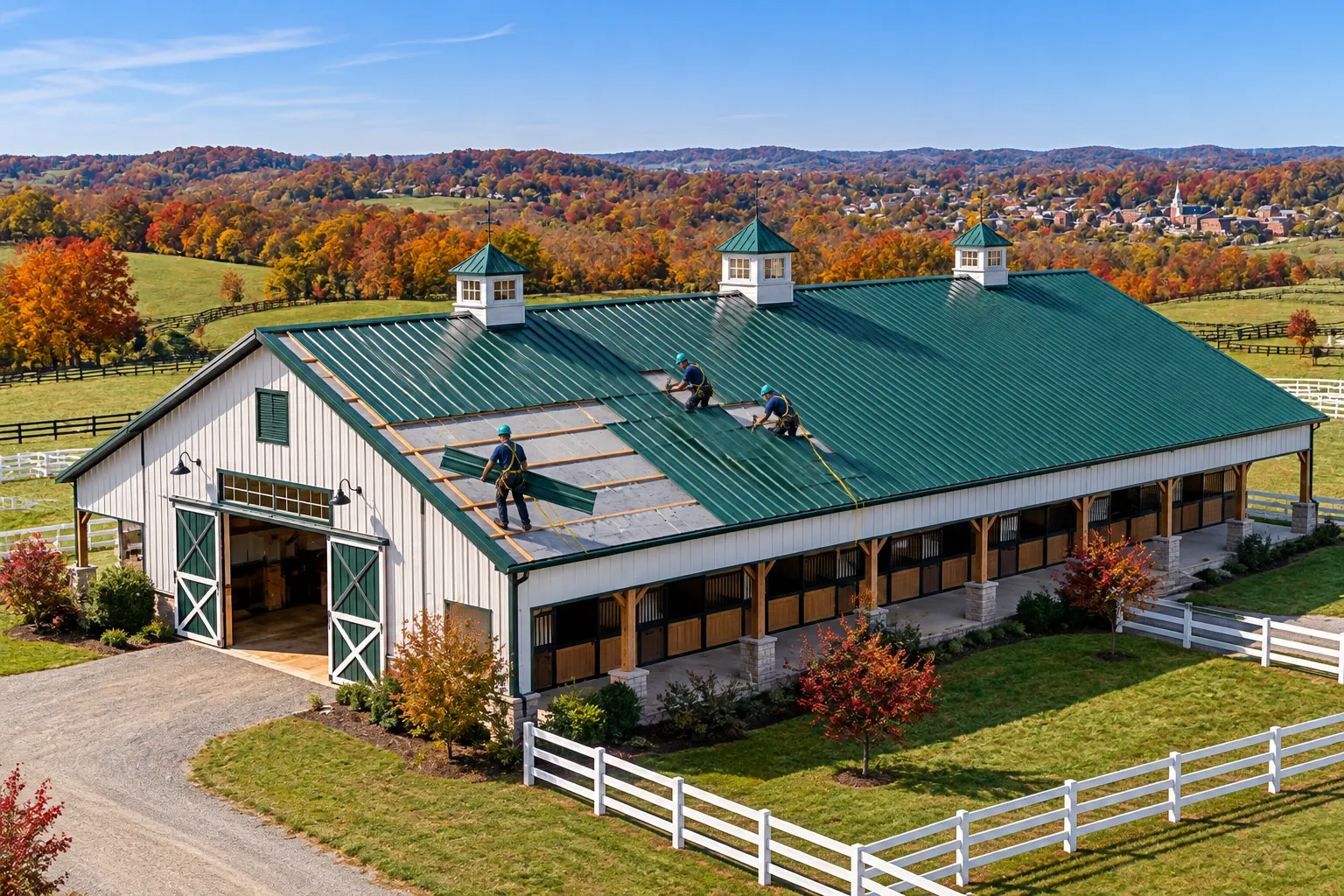
Standing seam and R-panel roofs, fastener and lap repairs, and retrofit framing over ponding flat roofs. Gauge, finish, and trim are matched so mixed metals never touch.
Metal roofing detailsWhich System Fits Which Roof
The shape of the roof and what sits on it point to the system long before price comes up.
Many properties carry more than one system: membrane over the office and warehouse, metal over the shop, and repairs on a roof that still has years left in it.
Call and describe what you see from the hatch or ladder: white sheet, black rubber, gravel, or metal panels. That is enough to plan the inspection.
Shared Process
The same five decisions run through every service, whatever the roof.
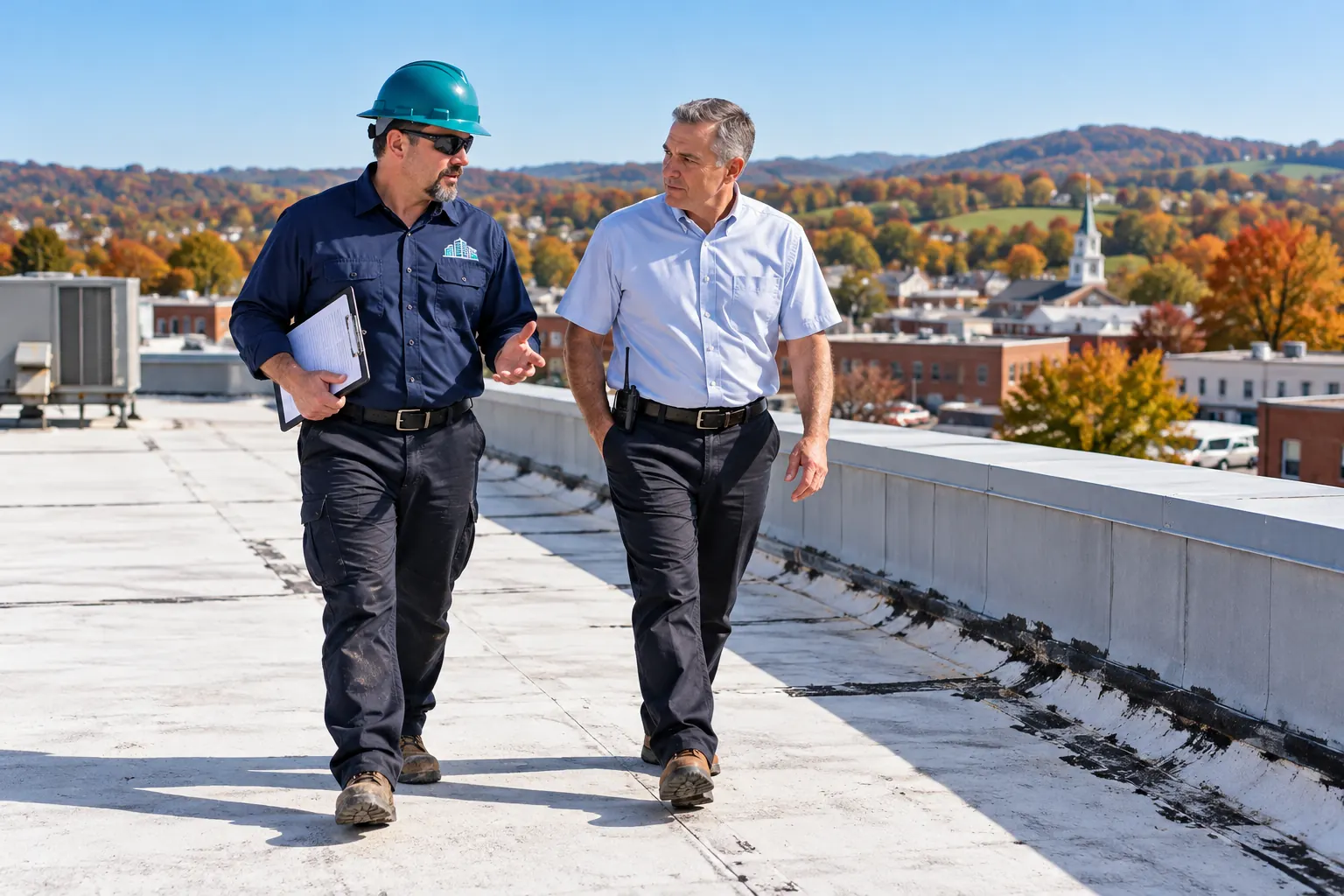
Seams, curbs, drains, scuppers, parapets, and edge metal are walked, the deck is checked from inside, and soft spots get core cuts before any recommendation. Leak spots you have seen inside are traced on the roof above them.
Every section is marked repair, recover, or tear-off, using moisture readings, core results, and the number of existing layers.
Membrane for flat decks, metal for sloped buildings, chemical-resistant sheet near process vents, and matching material for every repair.
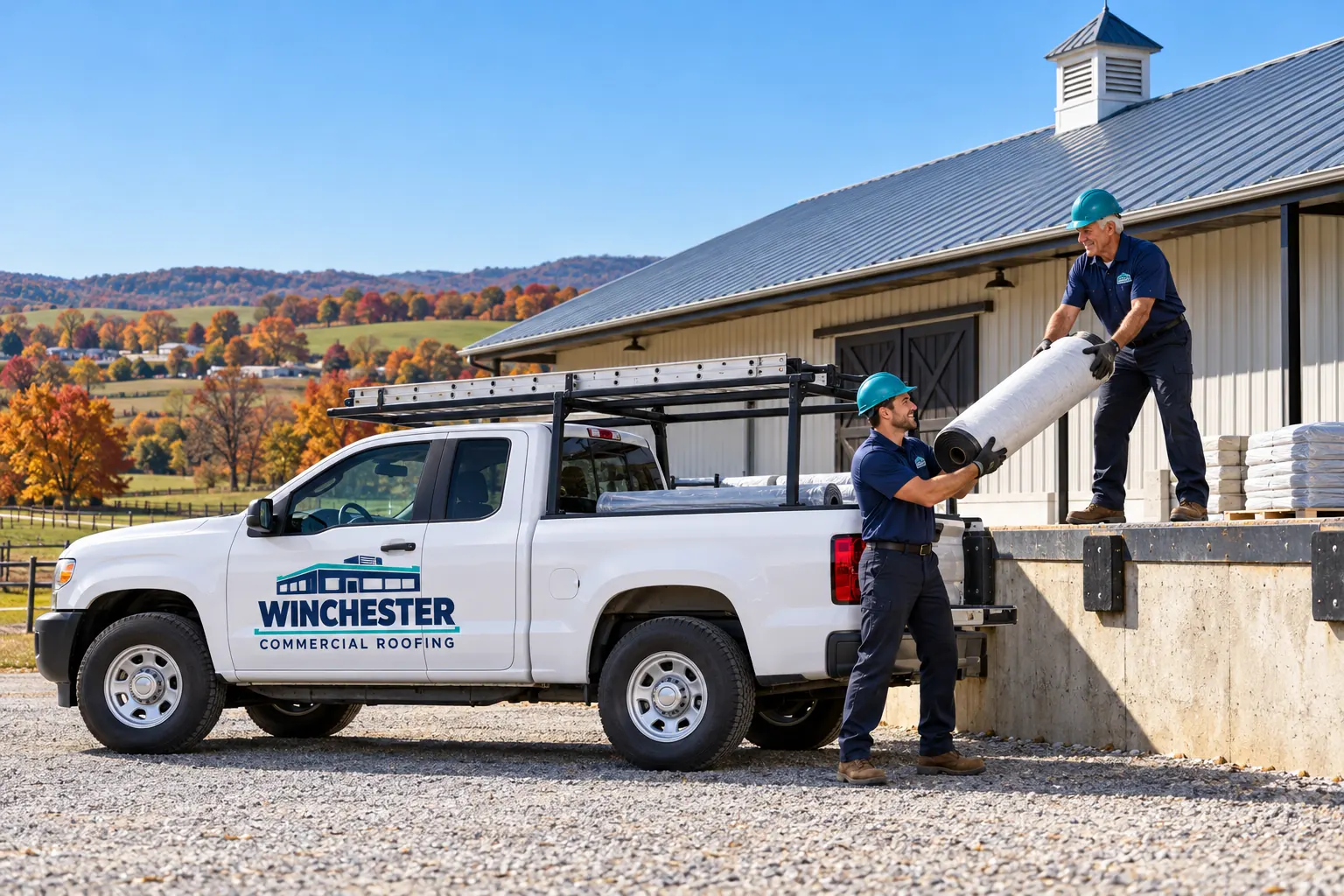
Crane space, dumpster spots, air-intake shields, and work hours are set around production, school calendars, or services. Each roof section is dried in before the crew leaves for the day.
You get notes on repairs made, curb heights, drain locations, and anything to watch on the next roof walk, which makes the following inspection faster and the roof history easy to hand over.
Services FAQ
All three are single-ply membranes for flat and low-slope roofs. TPO and PVC seams are welded with hot air, while EPDM laps use primer and tape. PVC resists grease and oil best, so restaurants and food plants lean toward it; warehouses and offices more often pick TPO roofing in Winchester or EPDM rubber roofing.
Most do. Crews work from the roof deck and close each section watertight before leaving for the day. Plan crane or lift space, a dumpster near the tear-off chute, shields over air intakes while adhesives cure, and covers over inventory below any deck repair.
When wet insulation, failing seams, or a damaged deck spread so far that patches only chase leaks. Soft spots underfoot, seams opening across many rolls, rust holes or sagging deck, wide blistering, and two existing layers all point to commercial roof replacement in Winchester, KY, confirmed by a moisture scan and core cuts.
The condition under the membrane decides. On tear-off vs recover for a commercial roof, a recover needs one dry, attached layer and leaves less debris, while a tear-off works with any number of layers and shows the whole deck. Kentucky reroofing rules come from its 2015 IBC-based code; tear-off or recover a commercial roof covers more.
The stripped deck is walked and marked section by section. Roof deck repair during tear-off means cutting out rusted steel or rotted wood and fastening new pieces to the joists in the pattern the roof system calls for. Older steel decks also get a fastener pull-out check.
Yes. Kentucky lists the 2012 IECC for commercial buildings, and energy code insulation for a roof replacement in Kentucky can mean adding boards once a tear-off exposes the deck. Ask the permit office for the level before ordering, since it changes curb, edge metal, and drain heights.
They can, and replacement is the easiest time to do it. Fixing roof drainage during a replacement means tapered insulation toward drains, crickets behind units and walls, larger or added drains in low bays, overflow scuppers, and wider gutters. Sagging joists get an engineer to look first.
IRS Publication 946 lists roofs on existing nonresidential buildings as qualified real property. It sets the 2026 deduction cap at $2,560,000, reduced once a business places more than $4,090,000 of qualifying property in service in the year. Ask a CPA, and keep an itemized invoice by line item.
Tell us about the building and the roof on it. We inspect and recommend the system that fits.