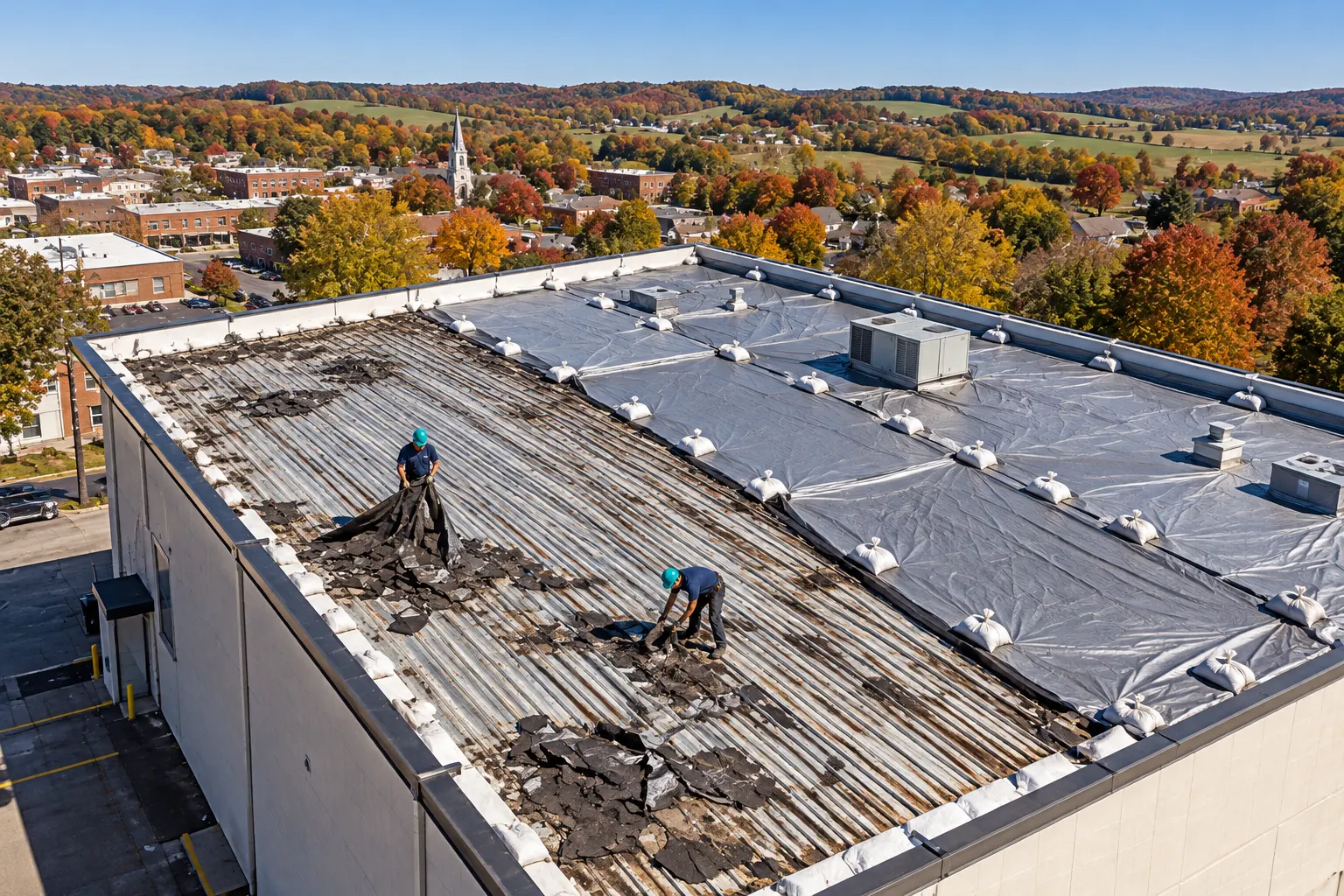
Fully Adhered EPDM After Tear-Off
The old roof comes off, the deck is repaired, insulation goes down, and the rubber is bonded across the whole field.
Fits: Roofs with wet insulation or failing laps everywhere.
EPDM Rubber Roofing
We are a Winchester EPDM roofing contractor installing rubber membrane on warehouses, plants, and older low-slope buildings, with taped seams and hand-flashed details.
Your First Visit
Is This Roof A Fit?
A Winchester EPDM roofing contractor chooses between black sheet, white-on-black sheet, and a ballasted layout based on cooling load and structure.
The U.S. Department of Energy compares roof surfaces by solar reflectance and thermal emittance. Thick insulation under black sheet narrows the gap with white.
Rubber Roof Trouble
Older rubber roofs fail in familiar places. Spotting them early tells you whether a repair or a new EPDM roof comes next.
Bars pulling away from parapet walls, letting flashing sag and water in behind it.
Ballast washing off the edge where gravel stops sit too low.
Older liquid-spliced seams are often the first to open on rubber roofs.
Drips that appear after a hard freeze when tired laps shrink and part.
Ponding beside a drain where the sheet was never sumped into it.
Membrane pulling at corners and bridging over the angle at the wall.
EPDM Options
Each EPDM roof is built from the same rubber, but the hold-down, seams, and details change with the building.
The old roof comes off, the deck is repaired, insulation goes down, and the rubber is bonded across the whole field.
Fits: Roofs with wet insulation or failing laps everywhere.
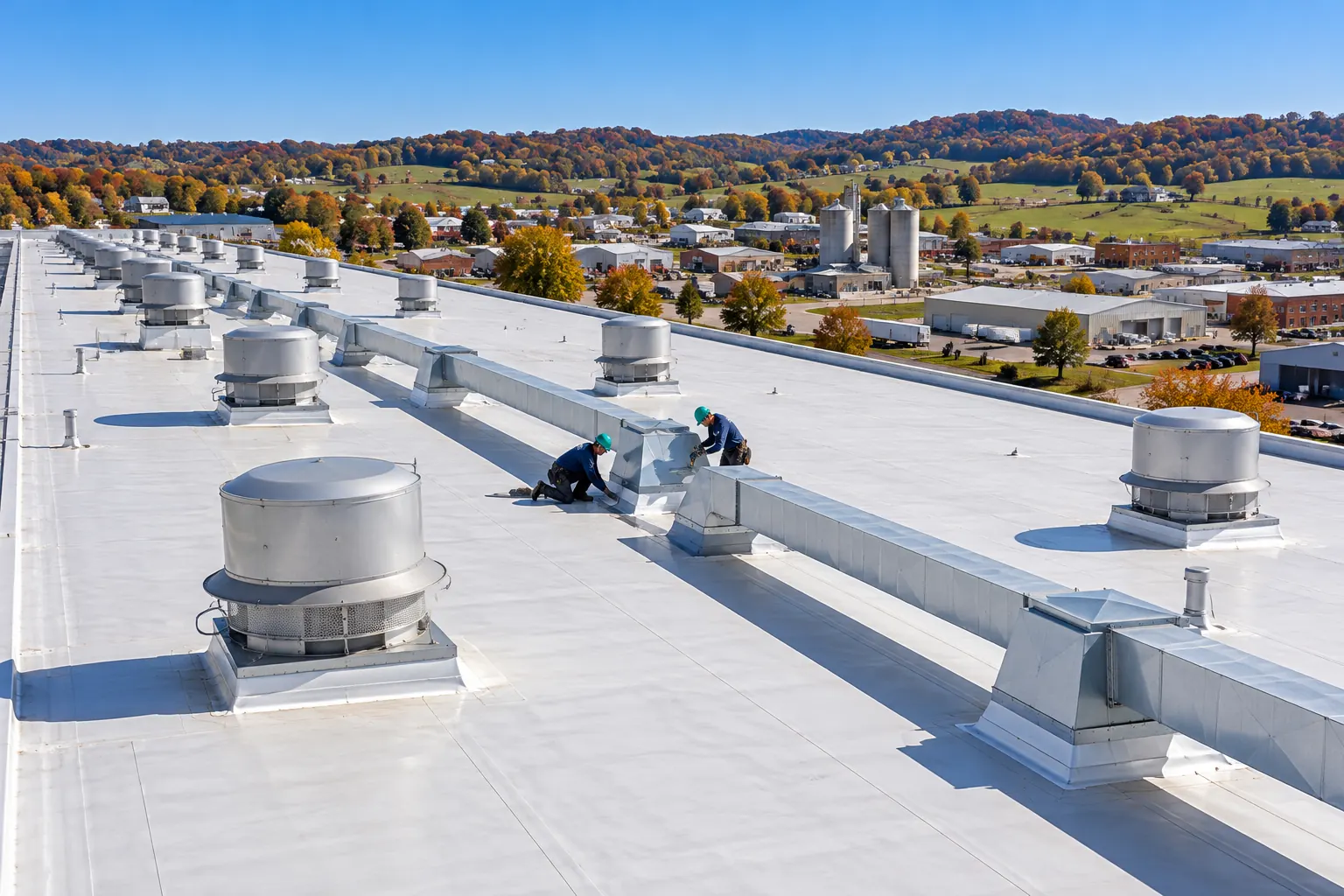
Loose-laid rubber held by river stone or concrete pavers skips adhesive and most fasteners. An engineer reviews light steel joists before this design is chosen.
Fits: Strong structures with parapets tall enough to hold stone.
The same rubber with a white top surface for buildings with real cooling loads. Seams are still taped and primed the same way.
Fits: Offices and shops where summer heat matters.
Benefits
Rubber roofs earn their place on central Kentucky buildings by how they handle movement and cold.
The Main One
EPDM stays pliable in winter and handles building movement and temperature swings, and modern tape seams hold up better through cold spells than the liquid-spliced laps on older rubber roofs.
Large rubber panels cut down the number of seams on a big deck.
Tapered insulation at each drain pulls water into the bowl.
Strong frames can carry stone instead of adhesive across the membrane field.
Call and tell us whether the roof is glued, fastened, or covered in stone, and where leaks show up inside. We plan the visit from there.
Installation Steps
Four decisions in order, with most of the hand work saved for drains and walls.
Seams, terminations, drains, and the deck from inside are checked first. Core cuts show whether the insulation under an old rubber roof stayed dry, and the number of existing layers tells us whether a recover is even possible.
Cooling load decides black versus white-on-black sheet. Structure decides whether stone ballast is possible, and parapet height decides whether it stays on the roof.
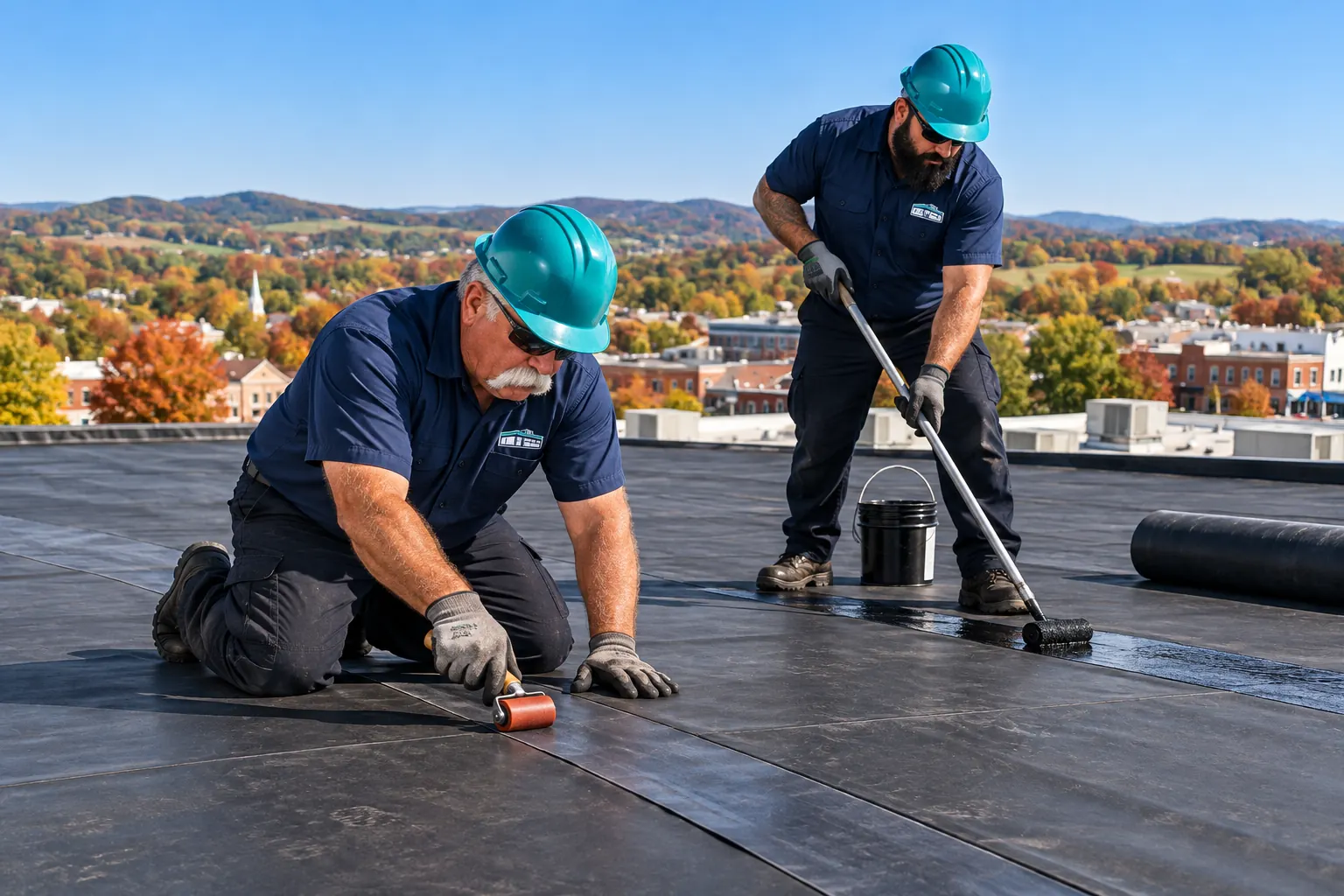
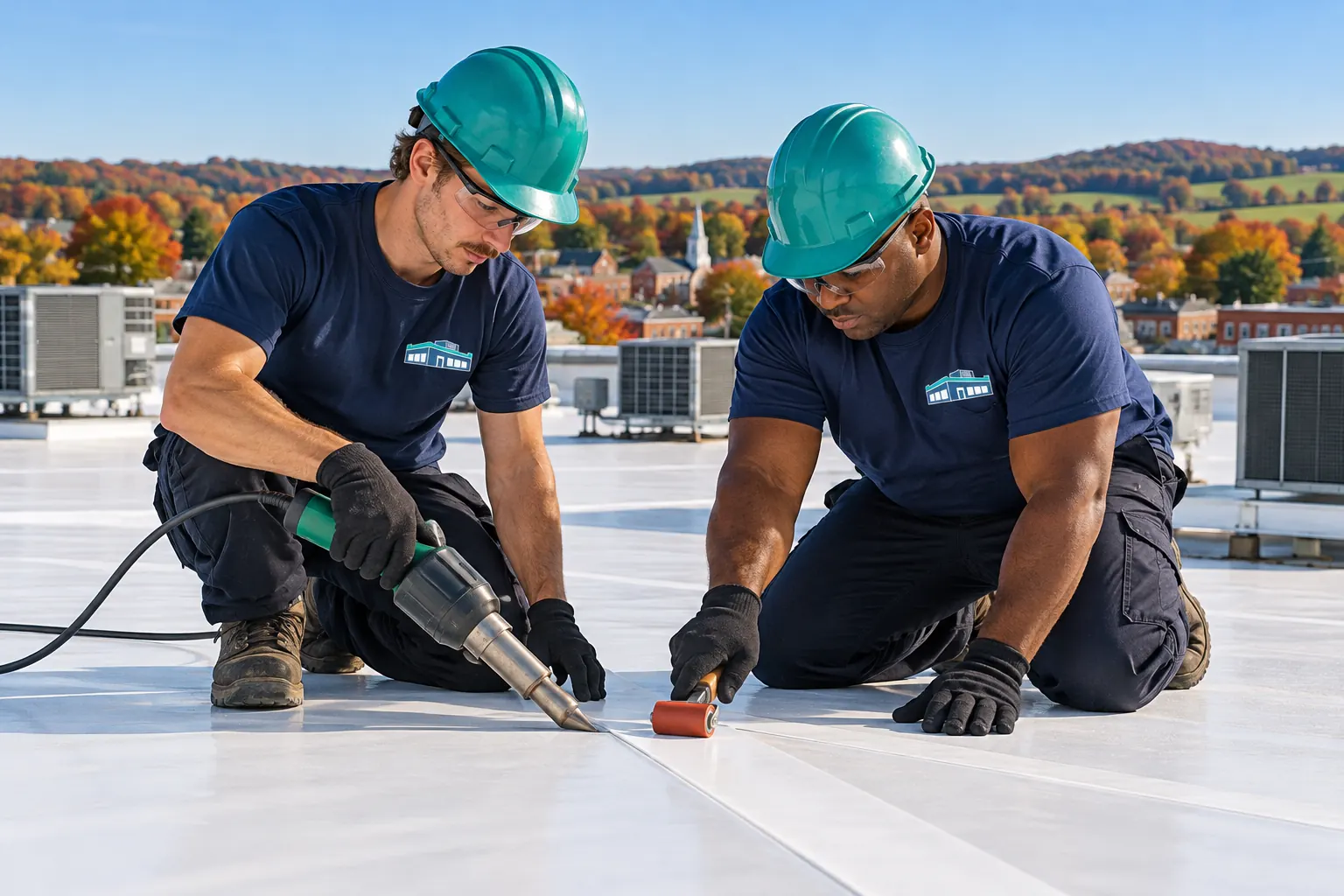
Each lap is cleaned of talc and dust, primed on both sides, set with tape once the primer flashes off, and rolled firmly toward the edge. Seam ends and T-joints get cover patches, the spots older roofs open first.
Rubber runs into each drain bowl under a clamping ring with sealant, up parapet walls under a termination bar or coping, and around scupper boxes on all sides.
Related Services
Two related services often come up while choosing a rubber roof.
Welded white TPO is the usual alternative when a reflective surface matters more than cold-weather flexibility.
TPO roofing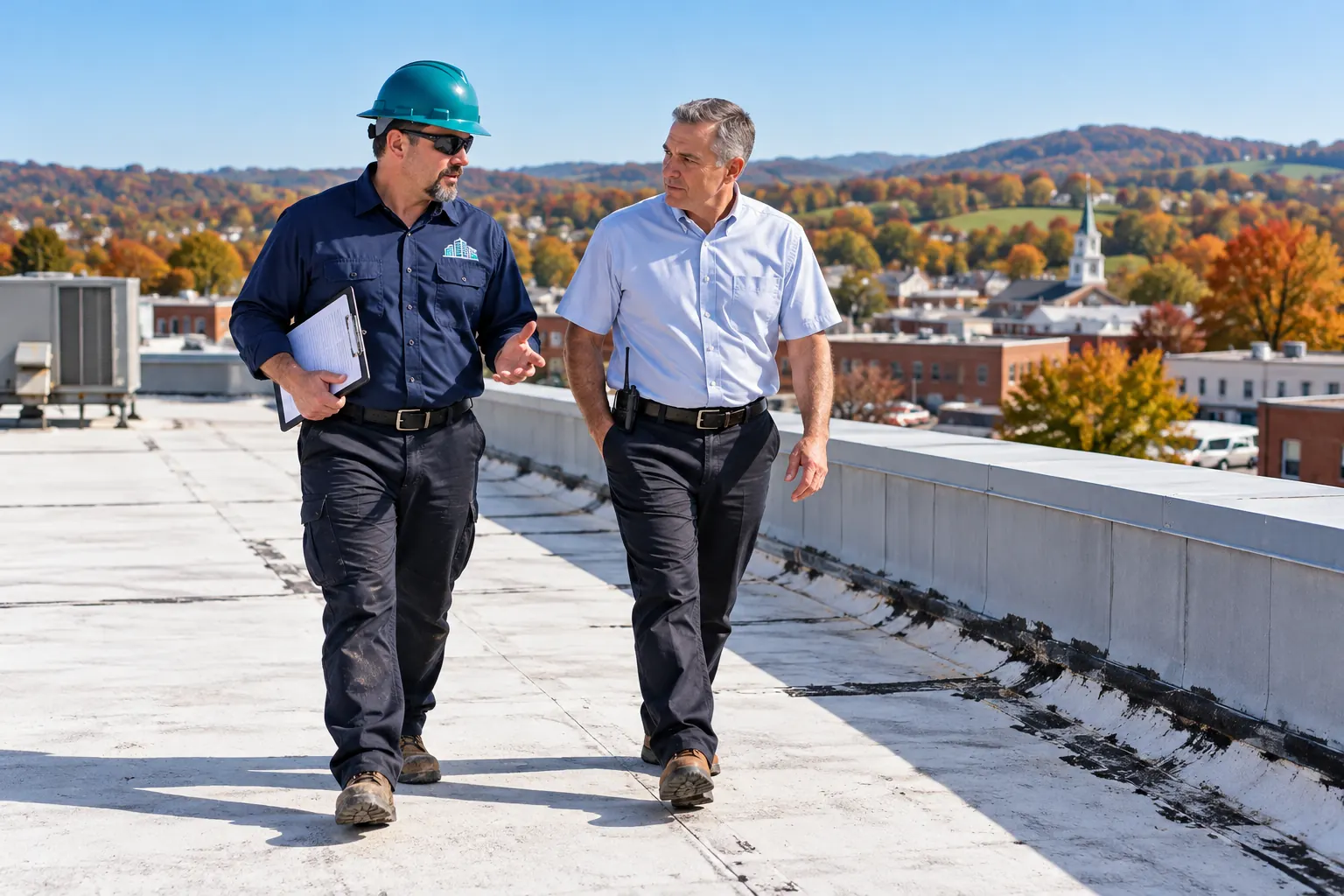
An older EPDM roof with a few open laps can often be repaired before a full replacement.
EPDM leak repairEPDM FAQ
EPDM is synthetic rubber, usually black, sold in wide sheets that stay flexible in cold weather. An EPDM rubber roof in Winchester, KY has its laps joined with primer and seam tape, with matching rubber flashing at curbs, pipes, and corners. Owners who want a lighter surface can choose white-on-black sheet.
It does. The black surface runs hotter on clear afternoons and passes more heat into the building. On black vs white EPDM roof heat, white-on-black sheet runs cooler but shows dirt over time. Thick insulation under the sheet narrows the difference, which is why black still suits well-insulated decks.
With seam tape over a primed lap, rolled under pressure. EPDM seam tape installation on a commercial roof runs in order: clean the lap of talc and dust, prime both surfaces and let the primer flash off, set the tape, press the upper sheet down, roll toward the edge, then cap seam ends and T-joints.
Yes, loose-laid EPDM can be held by river stone or concrete pavers instead of adhesive. With a ballasted EPDM roof, weight is the main question, because the structure has to carry the stone and light steel joists may need an engineer first. Parapets must be tall enough to keep stone on the roof, and leak tracing is slower under stone.
Drains and parapets get the most hand work. At each drain the rubber runs into the bowl under a clamping ring with sealant, and tapered insulation forms a sump. On parapets, flashing runs up the wall under a termination bar or coping cap, and through-wall scuppers get a metal box flashed on every side.
Recovering with EPDM follows the same rules as any recover: one layer, dry insulation, and a firmly attached surface. A cover board goes over the old roof, then the rubber is fastened or adhered. Edge metal, curb flashing, and drain clamping rings are reworked to the new height, and core cuts decide first whether the old roof can stay.
Send the address and what is on the roof now. We start with an inspection and core cuts.