Membrane Seam And Patch Repair
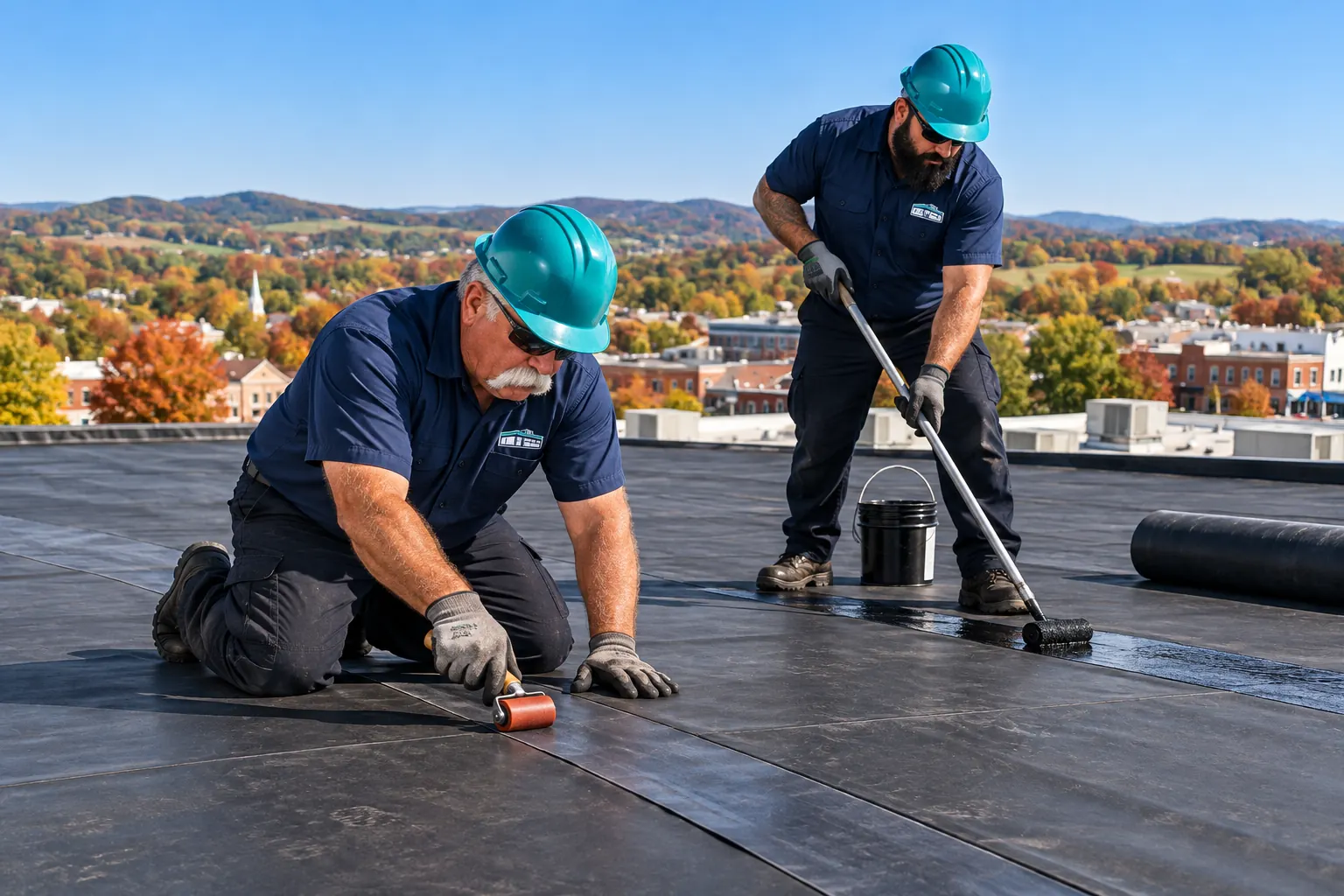
Open TPO laps are rewelded with hot air. EPDM laps get cleaned, primed, and taped, then capped at each T-joint with a cover patch.
Fits: Flat and low-slope roofs with leaks you can trace to specific laps.
Commercial Roof Repair
We work as a Winchester commercial roof repair contractor on membrane and metal roofs, tracing each leak from the stain inside to the seam, curb, or drain above it.

Your First Visit
Is This Roof A Fit?
A Winchester commercial roof repair contractor starts by sorting leaks into the ones a repair ends and the ones that keep coming back.
Two roof layers already in place rule out another recover under the building code, so that roof goes straight to the replacement column.
Where Leaks Show Up
Owners usually call about something they saw first. These are the signals that bring a repair crew to the roof.
Clogged downspouts push water back under the edge metal and into the wall.
A loose cap on the parapet lets rain run behind the wall flashing.
Water travels along the deck flutes, so the drip shows up away from the actual hole.
Wind-driven rain finds lifted laps and open terminations that a calm storm misses.
Cracked rubber at a vent or gas line, a common source of small, steady leaks.
Leaves and grit hold water around the bowl until it finds a weak lap.
Raised bubbles in the field, often over damp insulation, that split under foot traffic.
Repair Options
Repairs are matched to the roof system and the detail that failed, using the same material as the roof around it.
Open TPO laps are rewelded with hot air. EPDM laps get cleaned, primed, and taped, then capped at each T-joint with a cover patch.
Fits: Flat and low-slope roofs with leaks you can trace to specific laps.
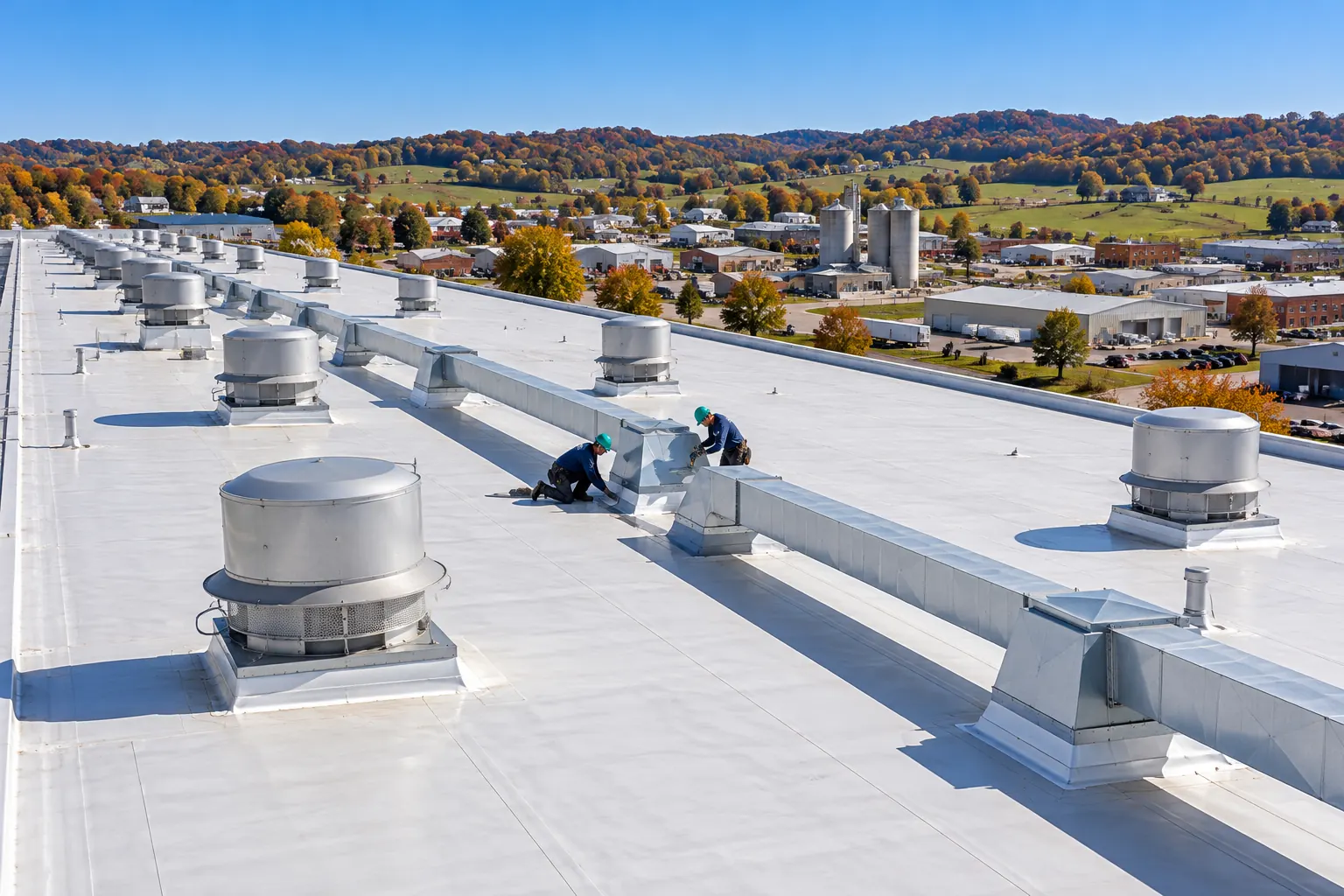
Split boots are replaced, cracked sealant at rooftop unit curbs is cut out and redone, and loose wall flashing is refastened under a termination bar.
Fits: Leaks near equipment, vents, and parapet walls.
Clamping rings are reset with fresh sealant, scupper boxes are reflashed, and gutters are cleared or resized where water sheets over the edge.
Fits: Ponding near drains and stains along exterior walls.
Benefits
A repair that fixes the actual source keeps the rest of the roof in service and buys time to plan the bigger job.
The Main One
Tracing water from the ceiling stain back along the deck flutes to the lap, boot, or curb that let it in means one repair closes the leak instead of three guesses spread across the field.
A sound repair on a mostly dry roof lets you schedule a full replacement for the right season.
Photos and notes on each repaired lap and curb make the next roof walk faster.
Spot repairs happen from the roof deck, with little noise or dust inside.
Call with the room where water is showing up and what is on the roof above it, such as a unit, a drain, or a vent pipe.
Repair Process
Each repair follows the water first, then the fix, then a check that the fix holds.
We start inside at the stain, then walk the roof above it and upslope from it, checking laps, boots, curbs, drains, and terminations along the path water could travel.
Probing seams, lifting loose flashing, and checking clamping rings narrows the leak to one detail. Core cuts around it show whether the insulation stayed dry.
TPO gets a welded patch, EPDM gets primer and cover tape, metal gets new screws, washers, and butyl tape at the lap. Mixed materials invite new leaks at the joint.
While the crew is up there, nearby drains are cleared and other tired laps are noted, so you know what the next repair or replacement would involve.
Related Services
Some roofs need more than a patch. These pages cover what happens next.
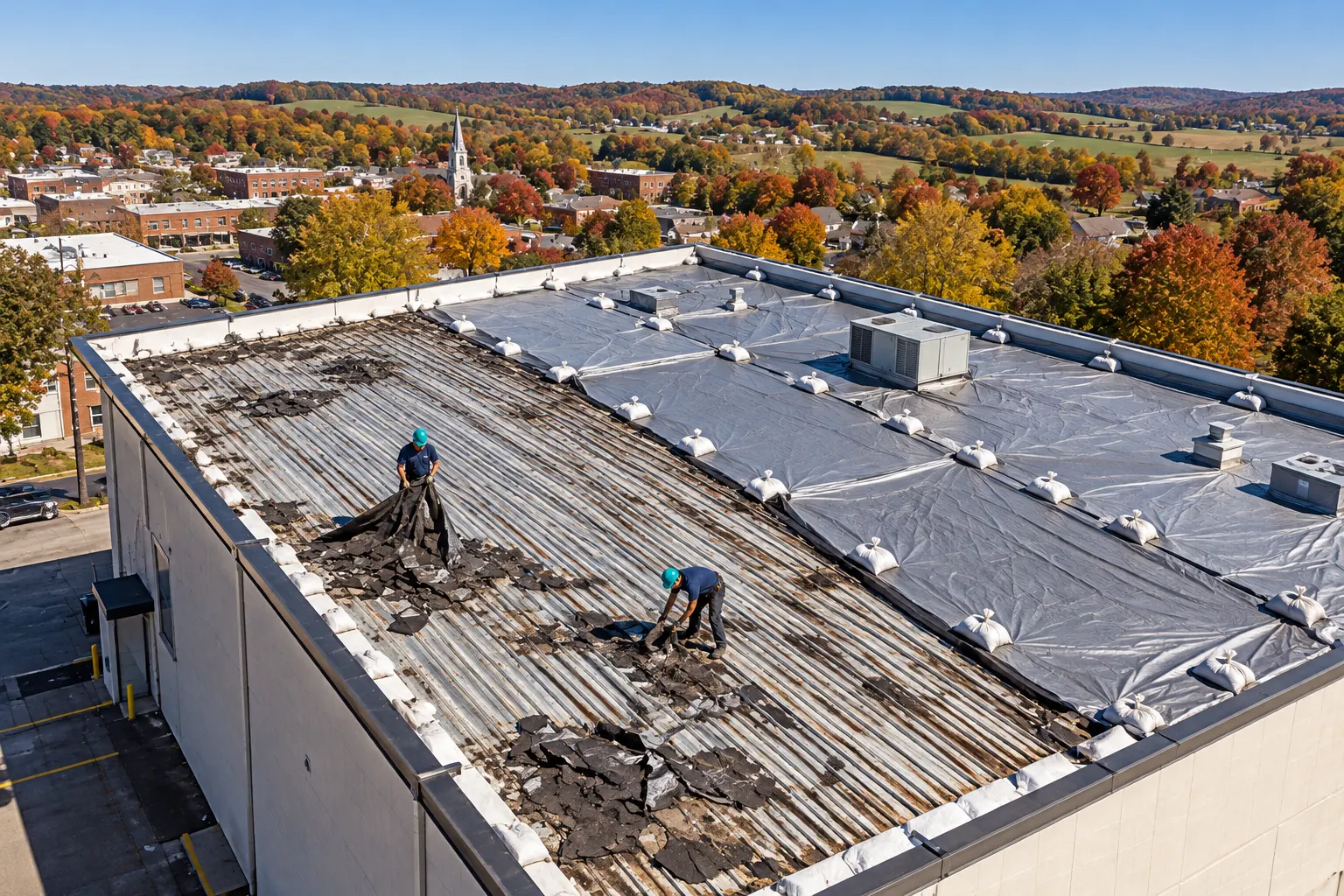
If leaks keep moving across a flat deck, a tear-off or recover with tapered insulation fixes the slope behind them.
Flat roof replacement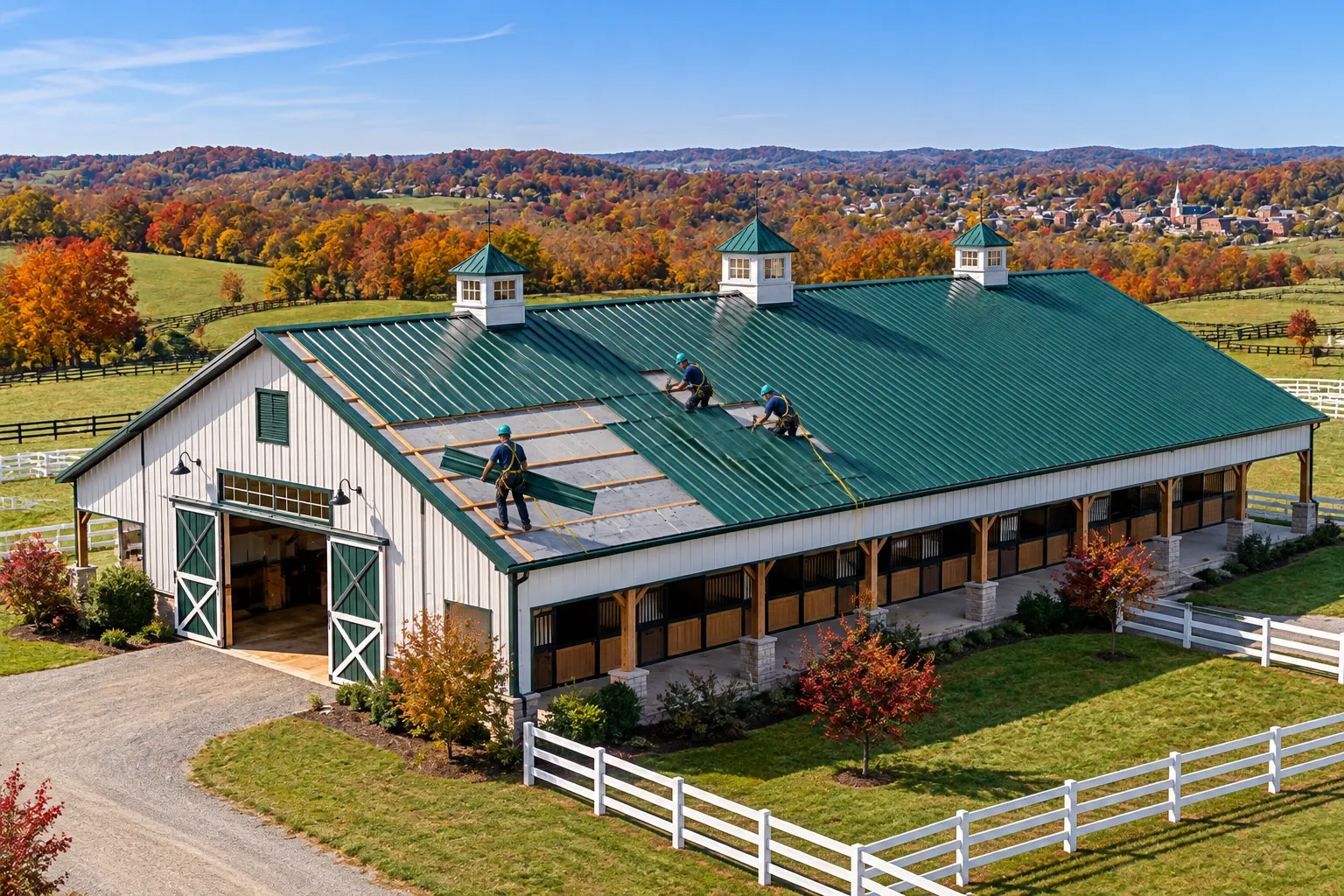
Backed-out screws and leaking end laps on R-panel roofs get their own repair and replacement options.
Metal roof repairs and panels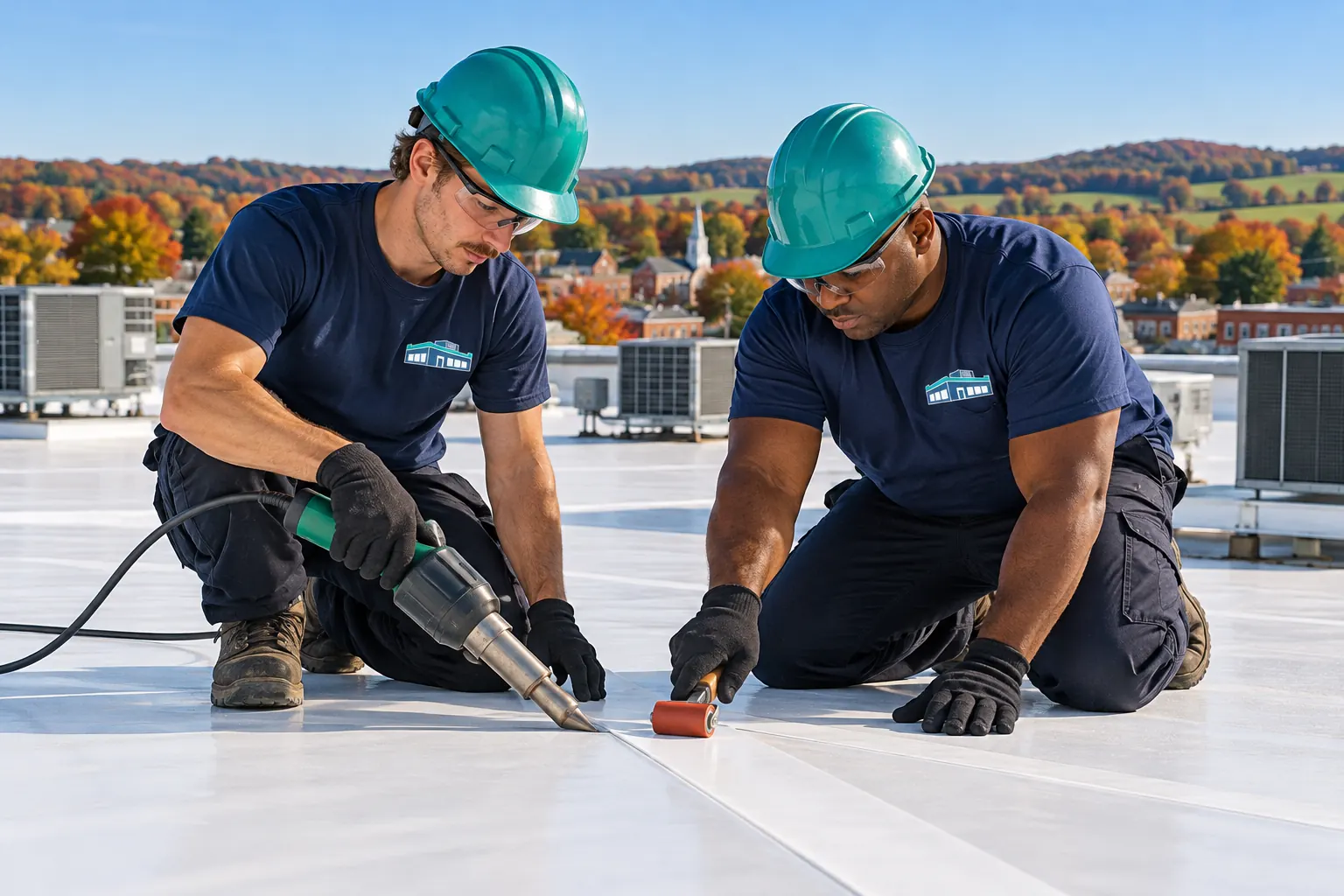
A worn single-ply roof is often replaced with welded TPO once repairs stop holding.
New TPO roofsRepair FAQ
Water runs along the steel deck flutes and the top of the insulation before it drips, so a stain can sit several feet from the actual opening. That is why a repair starts at the stain and works upslope on the roof, checking every lap, boot, and curb along the way.
Yes, for most leaks. Welded TPO patches, new pipe boots, and metal fastener work all go in during cold weather. Tape-based EPDM repairs need a clean, dry lap and primer that has flashed off, so the crew waits for a dry stretch and warms the area when needed.
When patches only chase leaks from one spot to the next, the roof is past repair. Soft insulation across large areas, seams opening on many rolls at once, rust holes in the deck, or two roof layers already in place all point to replacement, which a moisture scan and core cuts confirm.
Look for lifted edge metal at corners, missing coping caps, debris in drains and gutters, and new stains on ceiling tiles. Corners and perimeters take the strongest wind uplift, so they are the first places to check. Call before walking a wet roof yourself.
They should. A TPO roof gets TPO patches welded in, EPDM gets EPDM tape and flashing, and metal panels get matching screws, washers, and trim. Mixing metals, such as copper flashing against steel panels, causes corrosion at the contact points.
Tell us where the water shows up inside. We trace it on the roof and fix the source.