Commercial Metal Roofing

Winchester Metal Roofing Contractor

Tighten Panel Laps and Replace Rusted Screws Before Water Gets In

Working as a Winchester metal roofing contractor, we install standing seam and R-panel roofs, repair aging panels, and frame new metal roofs over ponding flat ones.

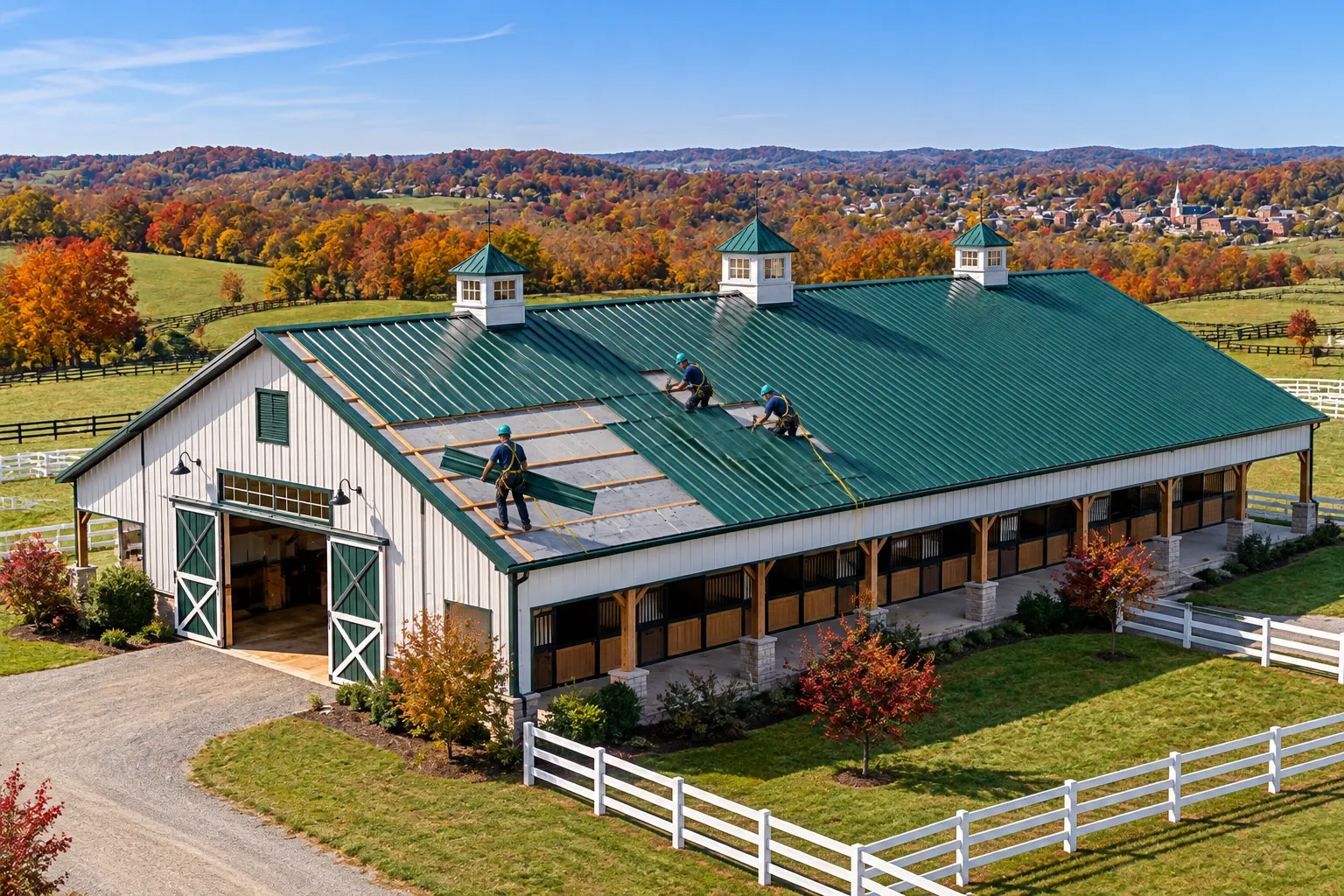
Roofers installing metal panels on a commercial building

Your First Visit

  1. Inspect Your Roof
  2. Written Scope
  3. Pick The System
  4. Work Around Your Hours

Is This Roof A Fit?

Standing Seam, R-Panel, or Retrofit Framing?

A Winchester metal roofing contractor weighs fasteners, slope, and upkeep before choosing a panel, since one difference shapes leak risk.

What We Install

Standing Seam

R-Panel

Retrofit Framing

Fasteners
Concealed clips
Exposed screws with washers
New panels on new purlins
Thermal movement
Panels slide on clips
Strain at each screw hole
Set by the new panel chosen
Low-slope use
Structural versions go lower
Steeper slope needed
Adds slope over a flat roof
Upkeep
Seam ends and trim
Washer and lap checks
Curbs rise through the new plane
Typical use
Offices, schools, retail
Shops, barns, warehouses
Ponding flat roofs and worn R-panel

Metal Roof Trouble

Metal Roofing Problems on Winchester Shops and Warehouses

Metal roofs tell you where the next leak will be, often well before it reaches the ceiling.

From The Parking Lot

Rust Under A Lap

Orange stains along a panel end lap where water has started to sit.

Loose Trim After Wind

Ridge or rake trim with missing closures and loosened fasteners.

Inside The Building

Drips Along Screw Rows

Leaks lining up with purlins where washers have cracked.

Wet Insulation Facing

Stains on the insulation below a leaking sidewall flashing.

On The Roof

Backed-Out Screws

Heads lifted off the panel by years of heat and cold cycling.

Dented Or Crushed Panels

Hail dents or foot traffic damage that opens the lap.

Cracked Curb Sealant

A dried bead around a rooftop unit curb letting water in.

Metal Roof Options

Commercial Metal Roofing Options for Winchester

Panels, gauge, finish, and framing are chosen for the building and how long you plan to keep it.

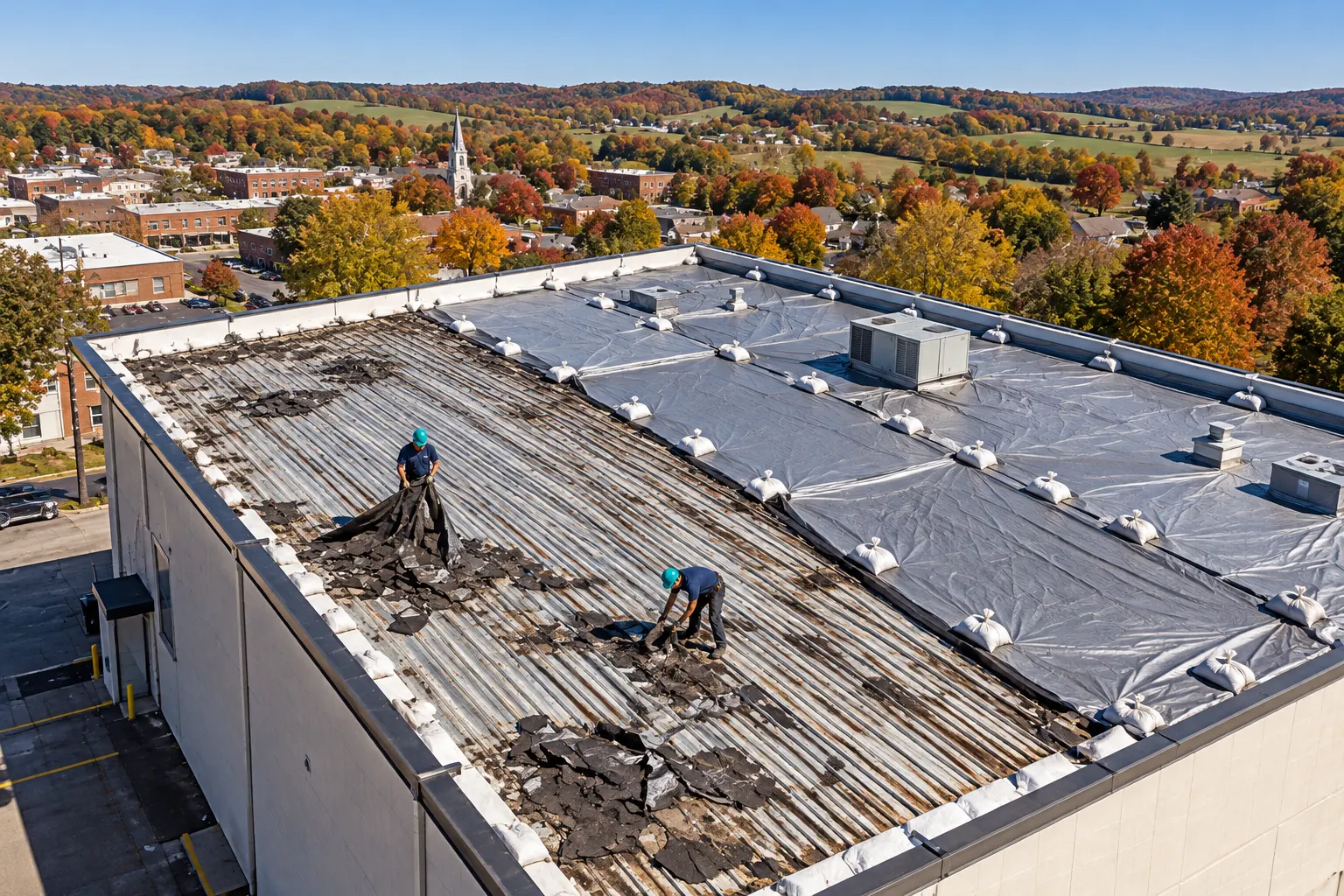
Crew tearing an old commercial roof down to the deck

New Standing Seam Or R-Panel Roof

Standing seam is often 24 gauge with concealed clips; R-panel is often 26 gauge with exposed screws. Trim pieces match the panel finish to avoid mixed-metal corrosion.

Fits: New roofs on offices, schools, shops, and warehouses.
Fastener And End-Lap Repair

Backed-out or rusted screws are replaced with new screws and washers. Leaking end laps are separated, cleaned, taped with butyl, and restitched.

Fits: Aging R-panel roofs with leaks along screw rows and laps.

Retrofit Framing Over An Old Roof

A light steel sub-frame sits over the existing roof, adding slope and room for insulation between new purlins. An engineer confirms the structure can carry it.

Fits: Ponding flat roofs or worn R-panel kept as a dry ceiling.

Benefits

Benefits of a New Metal Roof

Metal suits buildings with slope, and a retrofit frame gives slope to buildings that lack it.

The Main One

Fewer Exposed Fasteners To Fail

Standing seam panels hide their fasteners under raised seams and slide on clips as the steel expands and contracts, so the screw holes that leak on older R-panel roofs are gone from the field.

Wind And Hail Resistance

Heavier gauge panels and solid ridge cap fastening resist both.

Finish Choices

PVDF holds panel color in strong sun; SMP and bare Galvalume cost less.

Room For Insulation

Retrofit framing leaves space to add insulation without a tear-off.

Leaks Lining Up With the Screw Rows?

Call and tell us whether the panels have exposed screws, how old the roof is, and where water shows up inside.

Metal Roof Steps

How a Winchester Metal Roofing Contractor Plans the Work

Each metal roof starts with the fasteners and laps, then moves to the bigger choices.

  1. Inspect Your Roof

    We walk the panels checking screw heads, washers, end laps, gutters, valleys, pipe boots, and ridge and eave trim, then look for rust and wet insulation from inside. Rust stains under a lap or along a screw row show where the next leak will appear.

  2. Repair Or New Panels?

    Scattered fastener and lap leaks get repaired. Rust holes across the field, crushed panels, or a flat roof that ponds point to new panels or retrofit framing.

  3. Choose Panel, Gauge, And Finish

    Standing seam or R-panel is picked by slope and upkeep, then gauge and PVDF, SMP, or bare Galvalume finish, with trim matched to avoid mixed metals.

  4. Install And Set A Walk Schedule

    Panels, trim, and new curbs go on, then a twice-yearly walk is set, plus a check after hail or strong wind, with a written log of each repair.

Related Services

Roof Work That Pairs With Metal Panels

Metal buildings often share a campus with membrane roofs.

Metal Roof FAQ

Commercial Metal Roofing Questions From Winchester Owners

How do standing seam and R-panel metal roofs compare?

On standing seam vs R-panel commercial roofs, the difference is the fasteners. Standing seam hides them under raised seams on clips that let panels move, while R-panel screws through the face of every sheet. R-panel goes on faster and costs less material; standing seam suits buildings where fewer exposed fasteners matter long term.

What gauge and paint finish should commercial metal roof panels have?

Most commercial panels are 24 or 26 gauge steel, with 24 common on standing seam and 26 on exposed-fastener R-panel. On metal roof panel gauge and paint finish in Winchester, PVDF holds color best in strong sun, SMP costs less for shops and farm buildings, and bare Galvalume skips paint.

What is retrofit framing over an old roof?

A light steel sub-frame installed over an existing flat or metal roof so new panels sit above it. Retrofit framing over a flat roof in Kentucky adds slope to a roof that ponds, keeps old R-panel in place as a dry ceiling, and leaves room for insulation between the new purlins. An engineer confirms the structure first.

What repairs does an aging commercial metal roof need?

Fastener, panel, and flashing repairs where water has started to get in. Backed-out or rusted screws are replaced with new screws and washers, crushed or dented panels are swapped, leaking end laps get butyl tape and new stitching, and cracked sealant at unit curbs is cut out and redone.

How often should a commercial metal roof be inspected and maintained?

Twice a year, and again after hail or strong wind. Commercial metal roof inspection and maintenance covers screw heads and washers, gutters and valleys, pipe boots and curbs, ridge and eave trim, and the panel surface. Keep offcuts and branches off the panels, since loose steel scraps rust and stain the finish.

Do gutters on a metal roof need to be sized differently?

Often, yes. Long metal panel runs shed a lot of water to one eave, so gutters and downspouts need the capacity to carry it. Leaves and grit left in gutters and valleys hold water against the steel, and gutters should match the panel finish to avoid corrosion where metals meet.

Hire a Winchester Metal Roofing Contractor for Your Panels

Send the address and panel type. We inspect fasteners, laps, and trim and write up repair or replacement.

Call Us (513) 756-8349